School Grants
Burbio School Tracker 2/20: Momentum
This week we look at recent trends in school board meeting discussions over the last nine months, examine ESSER III spending by district size, and...
In this week's Tracker we cover a range of emerging and recurring AI issues from recent board discussions, material shifts in upcoming school schedules, and an overview of facilities director position titles in K-12. More below.
1. Burbio’s Signals Tracker reads and summarizes millions of pages of district school board discussions, helping clients identify immediate selling opportunities. Given how quickly AI tools are evolving, we continually monitor school board conversations in this area. This week, we analyze thousands of district board meetings from the past 60 days to track the latest AI activity in K-12.
We start with points of discussion we hadn't seen raised earlier in the Fall. Here are some of examples of what we learned:
Further below we review additional AI issues we discovered in the analysis.
2. One of Burbio's detailed foundational datasets is district-level school calendar data mapped to zip codes and counties. By tracking localized variations in start dates, breaks, and year-end schedules, we help clients in staffing, retail, travel and K-12 accurately forecast demand across, and within, individual states.
As an example, in the chart below we show the percent of K-12 school districts on vacation by day in the Spring of 2026 (blue) versus the Spring of 2025. Note the highest percentage of districts were off last year during the third week in April, while this year it is the first week in April. The reason for this is many school districts schedule their break around Easter, which occurs on April 5th this Spring versus April 19th a year ago:
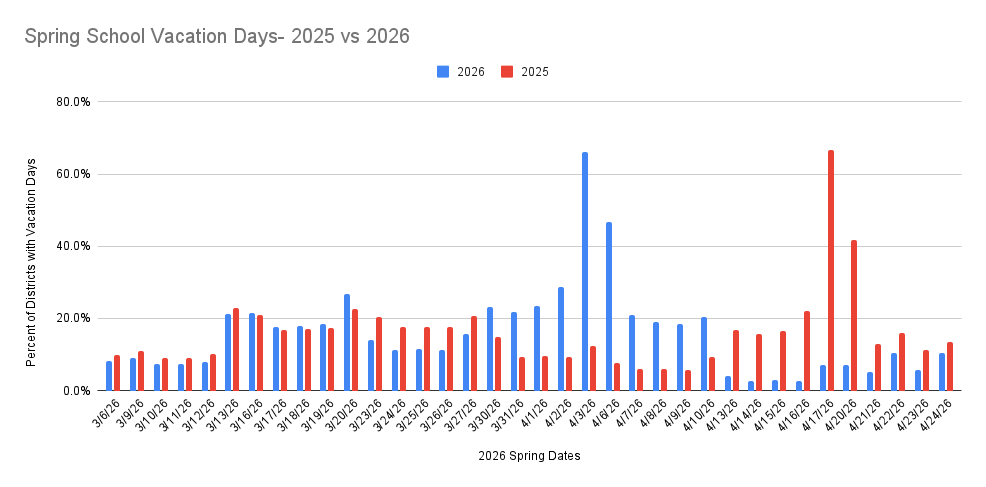 For this coming Fall, Labor Day 2026 is September 7th, while Labor Day 2025 was September 1st. This will result in districts that set their first day around Labor Day being a full week later than last year. Districts across the country are just publishing their Fall school calendars, and we update our data continually as new school schedules are announced.
3. Next week Burbio is adding dynamically updated district-level contact data (name, title, email address, phone, etc.) to our Intel Hub for decision makers across K-12. Clients will access the data for use in email campaigns and district outreach. This week we profile the variety of ways districts designate their facilities leadership. Below is the percentage of districts that have individuals with the indicated title:
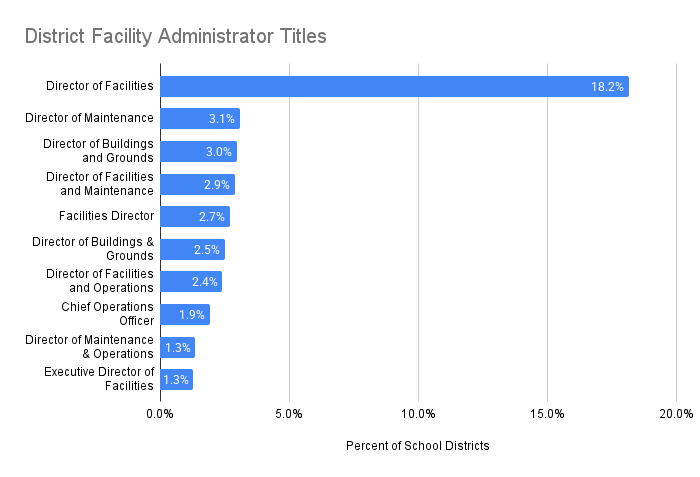
The long-tail of additional titles includes Chief Facilities Officer, Director of Facility Services, Director of Maintenance and Operations, and many more.
4. Continuing the evaluation of AI-related discussions from board meetings from the last 60 days, below are five of the most frequently cited benefits of AI for school districts:
We also asked about the biggest concerns of AI usage. These are issues that have come up frequently since we began monitoring the subject:
This week we look at recent trends in school board meeting discussions over the last nine months, examine ESSER III spending by district size, and...
This week we look at trends in school board meeting discussions in AI, a visualization of school budgets from "ESSER-heavy" districts across the...
This week we look at differences in school board meeting topics across separate regions, examine use of DEI terminology by districts in light of...