1. This quarter, Burbio is rolling out a district-level K-12 Curriculum Tracker, featuring curriculum usage and adoptions for districts nationwide. The Curriculum Tracker notes curriculum type (launching with ELA, Math, Social Studies and Science) and evaluation stage, from early consideration through pilots to adoption.
We are startin with California, where the state is going through a math curriculum adoption. For the chart below, we have compiled a market share analysis of just over 100 districts covering over one million students and shown the percentage of districts that have adopted or are piloting each math curriculum provider:
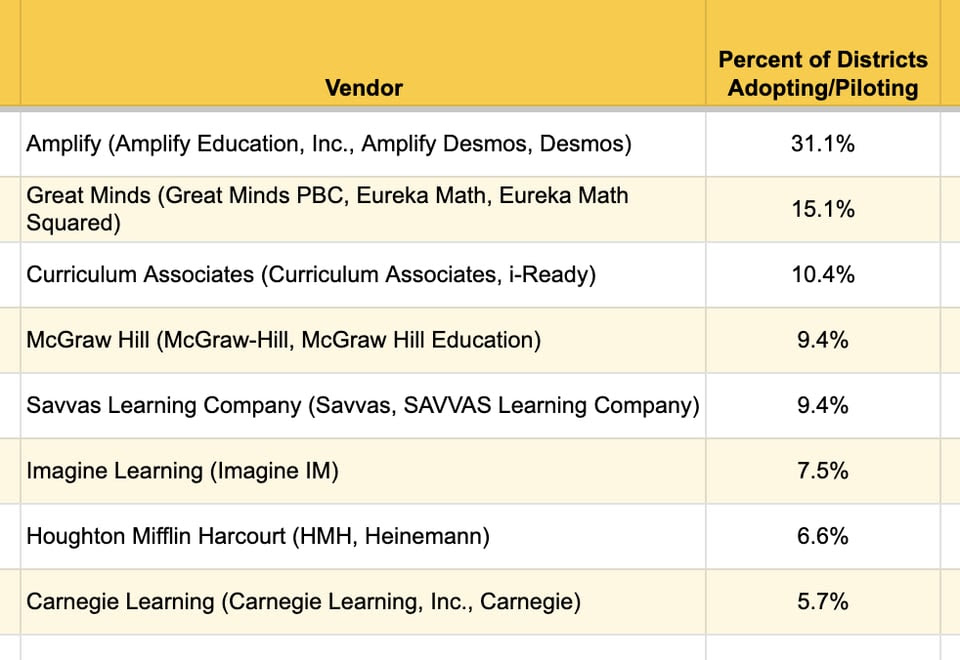 Vendors in the 2% to 5% market penetration range include Innovamat, CPM Educational Program, Illustrative Mathematics, Big Ideas Learning, and Pearson.
The Curriculum Tracker is built from Burbio's wide range of datasets, including board meetings, vendor payments, contracts, budgets and various state-level resources. It is modeled on Burbio's other comprehensive datasets such as the K-12 Construction Tracker and the Superintendent Tracker that allow clients to monitor early opportunities and competitive activity.
Click here to schedule a short demo to see how Burbio's foundational datasets, district contacts, and customized signals can power your K-12 business.
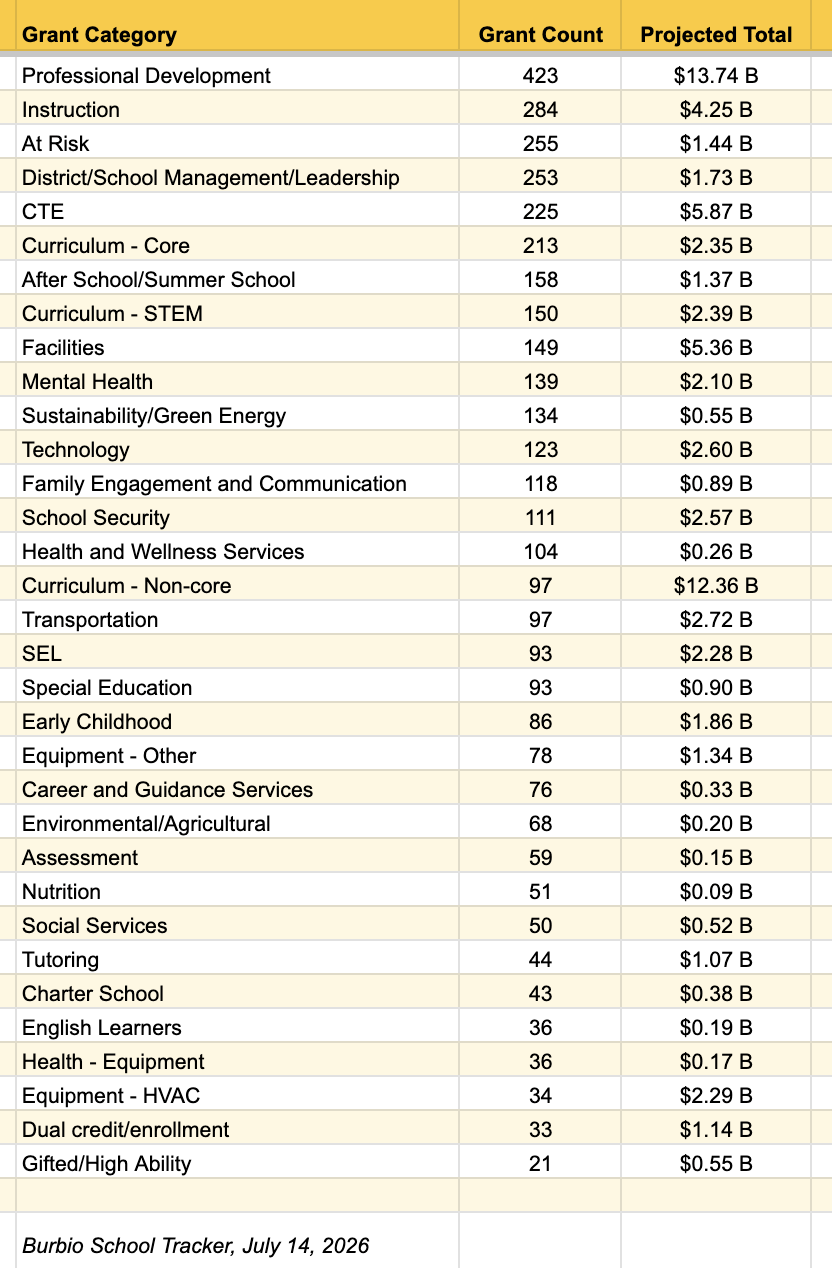
2. Burbio's State-Level Funding Tracker continuously tracks state grants for PreK-12 schools and alerts clients as new opportunities are announced, enabling early outreach to eligible districts. The chart below shows the size of each grant category. Because many grants span multiple categories, the figures should be viewed independently rather than added together.
Below are some open grants across a number of categories currently in our database:
-
In Washington, the FP 286 Small District Energy Assessment Grant funds certified energy audits for districts under 1,000 students, helping them prepare for the state's Clean Buildings Performance Standards requirements.
-
In Virginia, the School Security Equipment Grant funds security vestibules and other safety modifications for school sites and buses.
-
In Michigan, the Mentoring and Induction District Support Grant funds mentoring and induction programming for new teachers and administrators.
-
In Connecticut, the ESSA Competitive School Improvement Grant is designed to turn around chronically underperforming schools.
-
In Pennsylvania, the Pipeline Investment Program (PIPE) FY27 covers acquisition, construction, and site preparation costs for extending natural gas pipelines to eligible school districts.
-
In Alaska, the FY2028 Capital Improvement Project (CIP) Grant or State Aid for Debt Retirement Application funds major school facility capital projects.
-
In Oklahoma, the State and Local Cybersecurity Grant Program 2026 supports district-level cybersecurity infrastructure and protections.
3. In reviewing 2026-27 school district budgets, we found that student mental health is one area of consistent investment. The summary below draws on budgets from large districts and more than 1,000 school board discussions related to mental health investments in the coming year:
-
Clinical staffing remains the largest investment. Districts continue to expand psychologists, social workers, and counselors, with some establishing minimum mental health staffing levels for every campus rather than relying on annual requests.
-
Districts are relying on outside providers for intensive services. Rather than building all services internally, districts are expanding contracts with behavioral health agencies to provide therapeutic classrooms, school-based clinicians, and wraparound services, with contract sizes generally scaling to district enrollment.
-
Grants continue to supplement local funding. Districts are pursuing state and federal grants for counseling, substance-use prevention, and behavioral health programs, although participation varies by state and funding requirements.
-
MTSS and SEL remain the primary delivery frameworks. Investments continue in Tier 1 SEL curricula, behavioral screening tools, Tier 2 and Tier 3 interventions, executive functioning supports, and recurring student wellness surveys.
-
Wellness infrastructure extends beyond staffing. Districts are funding wellness centers, prevention coordinators, therapist internship programs, and restorative outdoor spaces designed to support student well-being.
-
Telehealth is expanding to address staffing shortages. Districts continue to add virtual counseling services to reach schools that struggle to recruit on-site clinicians.
-
Districts are strengthening crisis response systems. A growing number of districts are investing in behavioral health audits, threat assessment programs, and crisis-response infrastructure, often in response to new state safety requirements.