In this week's Tracker, we cover Federal revenue percentages for large districts, district transportation discussions, key considerations for curriculum pilots, and districts with outdoor construction projects. More below.
1. The National Center for Education Statistics (NCES) collects and reports U.S. education data. Reporting lags can limit its use for day-to-day decisions, but its enrollment and spending data provide benchmarks that help suppliers size markets and set priorities.
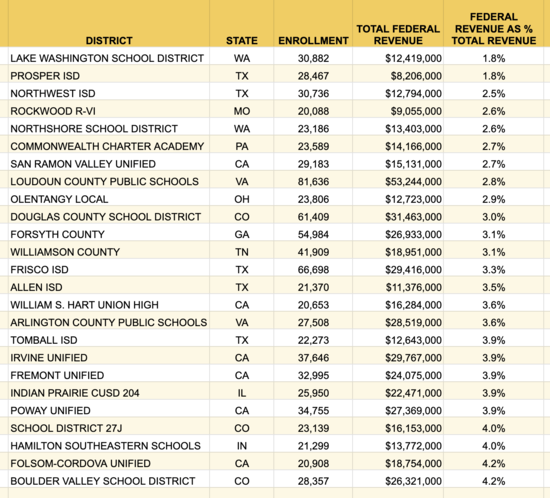
NCES recently published district-level revenue and spending data for FY 2024, a period that still included a portion of ESSER funding. This week we examine districts with more than 20,000 students, ranking them by the percentage of total revenue received from the federal government:
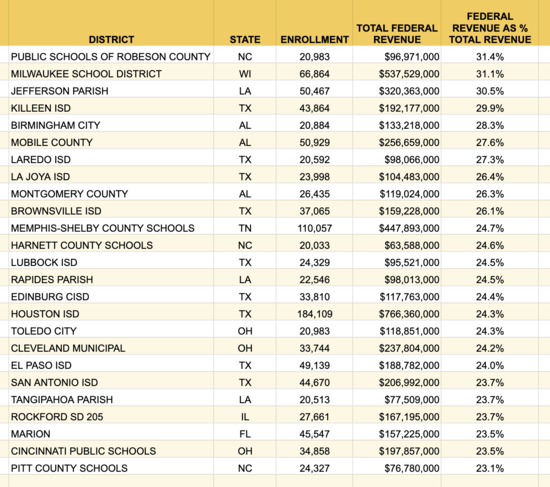
Further below, we show districts with more than 20,000 students with the lowest percentage of federal spending.
2. Burbio’s Signals Tracker analyzes millions of pages of school district board documents nationwide. Transportation issues come up repeatedly in board meetings, and this week we review the challenges districts face. The issues below come from over 800 district discussions across 49 states that have occurred since early August:
- Having enough drivers to provide reliable service: This ongoing issue accelerated during Covid-19. Districts review pay, retention bonuses, full-time opportunities, and training, while adjusting routes and using outside providers to cover staffing gaps.
- Getting students to school on time without excessively long rides: Key issues include late arrivals and overcrowding, comparing assigned riders with actual usage, and adjusting routes and stops to make better use of available buses.
- Serving students beyond regular bus routes: Districts use alternative providers, vans, and shared services for specialized placements, students experiencing homelessness, and other individual needs, balancing cost and flexibility.
- Tracking buses and students, keeping families informed: Districts use GPS, boarding scans, tablets, and parent apps to monitor trips and communicate changes.
- Addressing safety risks: Districts address hazardous walking routes and crossings, enforce bus stop-arm rules, and invest in onboard cameras and seat belts.
- Replacing aging buses while managing costs: This is a recurring capital expenditure (CapEx) issue, as districts develop multi-year replacement schedules and funding plans. For districts considering or operating electric buses, discussions involve charging infrastructure, utility connections, maintenance, and daily operating requirements.
3. Burbio’s Curriculum Tracker maps math, ELA, science, and social studies curricula from pilot through adoption. This week we use our MCP to examine how districts assess effectiveness during ELA classroom pilots. Our analysis covers ELA pilots in over 750 districts across 49 states, highlighting three trends:
- Making teacher feedback specific and consistent: Weekly logs, shared rubrics, and feedback sessions help districts identify recurring strengths and difficulties across classroom pilots.
- Combining feedback with classroom evidence: Walkthroughs, student work samples, and observations help districts assess how materials translate into lessons and how students respond.
- Using findings to shape the rollout: Pilot feedback informs adjustments to training, materials, and implementation schedules before districts make a broader commitment.
4. Burbio's Construction Tracker is an end-to-end review of K-12 construction projects nationally and allows for visibility into projects from the earliest planning stages to completion, including highly specific areas. Below are examples of recent activity in outdoor facilities:
- Hampton County School District, SC, is planning construction of a greenhouse to support its Career and Technical Education (CTE) program as part of a proposed November 2026 bond referendum.
- Patterson Joint Unified School District, CA, is developing a five-year facilities master plan that includes consideration of shaded outdoor spaces in future school construction.
- Zionsville Community Schools, IN, is evaluating playground replacements and upgrades following a district facilities study.
- Yakima School District, WA, is developing playground prototypes and considering high school track upgrades under its 2026 capital bond program.
- Mountain View Whisman School District, CA, has identified playground replacements as a capital priority in its Master Facilities Plan update. Facility assessments and community input will guide project priorities, with the plan due in June 2027.
5. Below is the list of districts with more than 20,000 students that have the lowest percentage of FY24 federal revenue as a percent of FY24 total revenue: